
Hotels in San Diego operate under some of the strictest fire safety requirements of any commercial occupancy type. The combination of transient occupants who are unfamiliar with the building, overnight sleeping occupancy, multiple floors, cooking operations, and high foot traffic creates a fire risk profile that the California Fire Code addresses with detailed and specific requirements.
If you own or manage a hotel in San Diego, fire safety compliance is not a seasonal task. It is a daily operational responsibility that touches your fire alarm system, suppression equipment, emergency lighting, exit signage, staff training, and documentation.
What Makes Hotel Fire Code Requirements Different
Hotels are classified as Group R-1 occupancies under the California Building and Fire Codes, which places them in the same category as motels and boarding houses. This classification triggers requirements that other commercial occupancies like offices or retail spaces do not face.
Fire alarm systems in hotels must provide notification in all sleeping rooms, not just common areas. This typically requires both audible and visual notification appliances in every guest room, including strobes for hearing-impaired guests as required by ADA. The fire alarm system must also be integrated with the building’s emergency communication system so that voice instructions can be delivered during an evacuation.
Automatic sprinkler systems are required throughout the building, including guest rooms, corridors, and back-of-house areas. Hotels with commercial kitchens also need dedicated kitchen hood suppression systems in addition to the building sprinkler system.
Smoke detectors must be installed in every guest room and in all common areas. In older hotels that were built before current detector requirements, retrofitting smoke detection to meet current code may be required when the building undergoes renovation or a change in ownership.
Inspection Frequency and What to Expect
The San Diego Fire-Rescue Department inspects hotels annually, and many hotels receive more frequent attention because of their high-risk occupancy classification. The State of California also mandates annual inspections of hotels and motels under Health and Safety Code requirements.
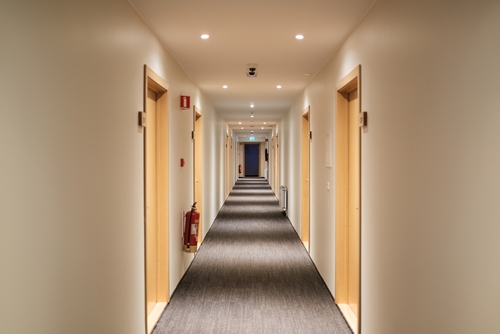
During a hotel fire safety inspection, the fire marshal evaluates the fire alarm system for proper operation across all zones and guest floors, sprinkler system condition and valve positions, emergency lighting and exit sign functionality, fire extinguisher compliance (type, placement, and current inspection tags), corridor clearance and exit path accessibility, kitchen hood suppression system maintenance records, and guest room door hardware (self-closing devices and proper latching).
Every one of these items generates a pass or fail, and failures result in Notices of Violation with correction deadlines. For hotels, a serious fire code violation can also trigger involvement from the California State Fire Marshal’s office, which has independent authority to order corrections or restrict occupancy.
Staff Training Is Part of Compliance
Unlike many commercial properties where fire safety is primarily an equipment and inspection issue, hotels have a significant human element in their fire safety program. Hotel staff are often the first responders during a fire event, responsible for activating the alarm if it has not already triggered, directing guest evacuation, assisting guests with mobility limitations, and communicating with the fire department upon arrival.
The California Fire Code requires that hotels maintain a fire safety plan and that staff be trained on the plan’s procedures. Documentation of this training should be maintained and available during inspections.
Having your fire protection contractor coordinate with your management team on annual fire safety training ensures your staff knows how the building’s systems work and what their responsibilities are during an emergency.
Managing Ongoing Compliance
Hotels have the added challenge of maintaining fire safety compliance while operating 24/7 with guests in the building. Scheduling fire alarm inspections and sprinkler system testing requires coordination to minimize guest disturbance while still completing the required testing on schedule.
Working with a single licensed fire protection contractor who handles fire alarm testing, sprinkler inspections, suppression system maintenance, and extinguisher service simplifies the scheduling process and ensures that all test reports are submitted through The Compliance Engine as required.
For older hotels considering renovations or rebranding, a fire protection consulting assessment early in the planning process can identify which fire code upgrades will be triggered by the renovation scope and help you budget for them before construction begins.
If you operate a hotel in San Diego and want to verify your fire safety compliance status, contact a licensed fire protection contractor who understands the specific requirements that apply to hospitality properties.





Commercial Property ManagerSan Diego, CA