
Construction sites are among the highest fire risk environments in San Diego. The combination of hot work (welding, cutting, soldering), temporary electrical systems, combustible building materials, and the absence of completed fire protection systems creates a fire exposure that the California Fire Code addresses with specific requirements.
If you are a general contractor, project manager, or developer working on a commercial construction project in San Diego, fire protection is not something that kicks in when the building is finished. It is a requirement from the first day of construction through final occupancy.
California Fire Code Requirements for Construction Sites
The California Fire Code, Chapter 33 (Fire Safety During Construction and Demolition), establishes requirements for fire protection on construction sites. These requirements apply to all commercial construction projects in San Diego and are enforced by the San Diego Fire-Rescue Department.
Key requirements include maintaining fire access roads for emergency vehicles throughout the construction phase, providing portable fire extinguishers at each floor level and in areas where hot work is performed, prohibiting open burning on construction sites within the city, storing combustible materials (lumber, insulation, packaging) in approved locations away from ignition sources, and maintaining temporary fire protection systems when portions of the building are occupied before final completion.
Hot Work Permits and Fire Watch
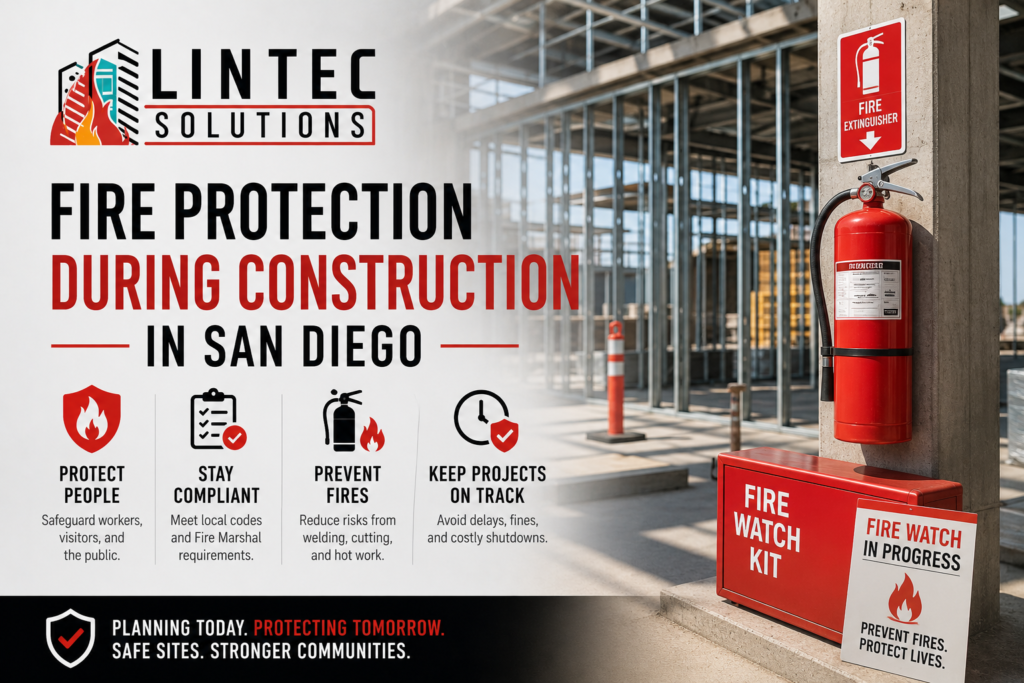
Hot work (any operation that produces sparks, open flames, or high heat) is one of the leading causes of construction fires. The California Fire Code requires a hot work permit program for all commercial construction projects.
Before any hot work begins, the area must be inspected for combustible materials within 35 feet of the work location. Combustible materials must be relocated or protected with fire-resistant covers. A fire watch must be maintained during the hot work and for a minimum of 30 minutes after the work is completed.
The fire watch person must have no other duties during the watch period and must have a portable fire extinguisher immediately available. This is the same fire watch concept that applies to building system impairments, but in the construction context it is tied specifically to hot work operations.
Documentation of hot work permits and fire watch logs must be maintained on site and available for inspection by the fire department at any time.
Managing Fire Protection System Impairments
On many San Diego construction projects, portions of the fire alarm and sprinkler systems are installed and activated before the entire building is complete. This is common in phased construction where parts of the building are occupied while other sections are still under construction.
When construction activities require taking fire protection systems offline (shutting down sprinkler zones for tie-ins, disconnecting fire alarm devices during ceiling work, impairing suppression systems for modifications), the impairment must be managed in accordance with NFPA 25 and the California Fire Code.
The building owner and contractor must notify the fire department and the fire alarm monitoring company of the impairment, implement a fire watch for the affected area, limit the duration of the impairment to the minimum time necessary, and restore the system and verify operation as soon as the work is complete.
Poor management of impairments during construction is one of the most common fire code violations on San Diego construction sites. Planning the construction sequence to minimize impairment durations and coordinating with your fire protection contractor to restore systems quickly reduces both fire risk and regulatory exposure.
Coordination with Fire Protection Installation
Fire alarm and suppression system installation typically happens in phases during construction: rough-in during framing, device installation after ceilings and walls are finished, and final commissioning before occupancy.
Working with a design-build fire protection contractor who is involved from the plan review phase ensures that the fire protection installation is coordinated with the overall construction schedule. This reduces conflicts with other trades, minimizes the need for impairments to completed systems, and keeps the fire alarm and suppression system installation on track for final inspection.
Pre-Occupancy Requirements
Before any portion of a San Diego building can be occupied, the fire protection systems serving that area must be fully installed, tested, and approved by the fire department. This includes the fire alarm system (all devices installed, programmed, and tested), the sprinkler system (all heads installed, piping pressure-tested, and water flow verified), any required suppression systems (fully charged and commissioned), fire extinguishers (properly placed and tagged), and emergency lighting and exit signage (operational on both normal and backup power).
The fire department conducts a final inspection to verify all of these items before issuing the certificate of occupancy. Incomplete fire protection is one of the most common reasons certificates of occupancy are delayed on San Diego projects.
If you are managing a construction project in San Diego and need a fire protection contractor who can coordinate installation with your construction schedule and ensure the systems are ready for final inspection, contact Lin Tec Fire Solutions to discuss your project timeline.





Commercial Property ManagerSan Diego, CA