
Retail properties in San Diego range from standalone shops to major shopping centers, and each faces fire protection requirements that reflect the unique risks of retail environments: high public foot traffic, seasonal occupancy spikes, stockroom storage, and tenant turnover that changes the fire load and layout of the space.
Whether you are a retail property owner, a shopping center manager, or a tenant opening a new store, understanding the fire protection requirements for retail occupancies in San Diego will help you stay compliant, pass inspections, and protect your business.
Fire Protection Basics for Retail Occupancies
Retail buildings are classified as Group M (Mercantile) occupancies under the California Building and Fire Codes. This classification carries specific requirements for fire alarm systems, sprinkler protection, exit access, emergency lighting, and fire extinguisher placement.
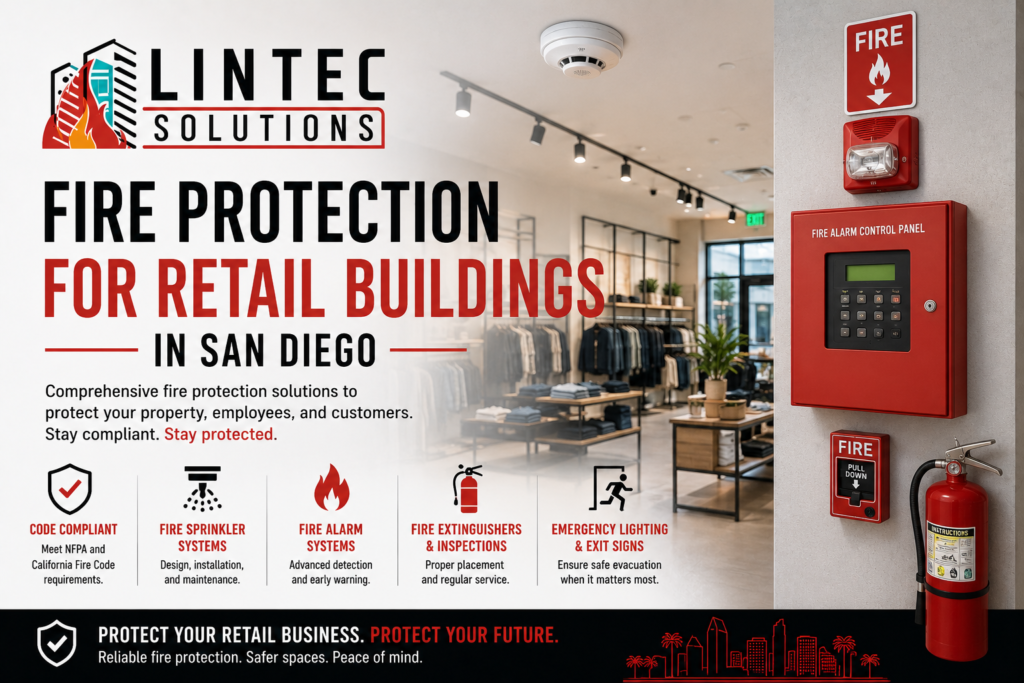
Most retail buildings of any significant size require automatic fire sprinkler systems. Fire alarm requirements vary depending on the building size, configuration, and whether the space is part of a larger multi-tenant complex.
Standalone retail buildings may require a simple fire alarm system with manual pull stations and notification appliances. Retail spaces within a larger multi-tenant building connect to the building’s central fire alarm system with devices within the tenant space tied back to the main control panel.
Shopping centers and malls typically have comprehensive fire alarm and sprinkler systems that cover common areas, individual tenant spaces, stockrooms, food courts, and back-of-house areas.
Stockroom and Storage Compliance
The stockroom is where most retail fire protection problems originate. Retail stockrooms accumulate merchandise, packaging materials, and seasonal inventory that can significantly increase the fire load in the space.
The California Fire Code limits storage heights and requires minimum clearances between stored materials and sprinkler heads (18 inches in most cases). When inventory is stacked too high or pushed too close to the ceiling, sprinkler spray patterns are disrupted and the system cannot perform as designed. This is the same issue that affects warehouse environments, but it occurs on a smaller scale in retail stockrooms.
During a fire department inspection, the fire marshal will check stockroom storage heights and clearances, verify that fire extinguishers are accessible and not blocked by merchandise, confirm that electrical panels and fire alarm devices are not obstructed, and verify that stockroom exits are clear and properly marked.
Retail managers should train staff to maintain proper storage practices and clearances as part of their daily operations, not just before scheduled inspections.
Seasonal Considerations
San Diego retail businesses experience occupancy spikes during holiday seasons, special events, and tourist-heavy periods. These fluctuations affect fire protection in several ways.
Higher occupancy loads increase the importance of clear exit paths and properly functioning emergency lighting and notification appliances. Seasonal merchandise displays and promotional fixtures can block exits, obstruct sprinkler heads, or cover fire alarm pull stations if staff are not trained to maintain clearances.
Temporary structures (pop-up shops, seasonal kiosks, outdoor display areas) may trigger additional fire code requirements depending on their size, construction materials, and placement relative to building exits.
The fire department may increase inspection frequency during peak retail seasons, particularly for properties with a history of compliance issues.
Tenant Build-Out Fire Protection
When a new retail tenant builds out a space, the fire protection requirements depend on the scope of the build-out. Minor cosmetic changes may not require fire protection modifications. But changes that add partition walls, enclosed stockrooms, or cooking equipment (for food service tenants) will likely require modifications to the sprinkler layout, fire alarm device placement, and potentially the addition of a kitchen hood suppression system.
These modifications require fire department plan review and approval before work begins. The landlord’s fire protection requirements should be clearly defined in the lease so that tenants understand their obligations and engage a licensed fire protection contractor early in the build-out process.
Keeping Retail Properties Compliant
Retail fire protection compliance requires attention to both the installed systems and the operational practices within the space. The best fire alarm and sprinkler system in the world will not protect your building if exits are blocked by merchandise displays and stockrooms are overloaded beyond the permitted storage configuration.
A structured inspection and maintenance program covers the systems side. Operational compliance (exit clearance, storage practices, seasonal adjustments) is the retailer’s daily responsibility.
If you own or manage a retail property in San Diego and want to ensure your fire protection systems and operational practices meet current code requirements, contact Lin Tec Fire Solutions for a comprehensive assessment.





Commercial Property ManagerSan Diego, CA